

17
2020
-
11
How to wash rice thoroughly
Steamed rice is a dish that most people enjoy. At home, we typically use a rice-washing basin to rinse the rice. While this method works well for household use, it becomes somewhat cumbersome when dealing with large quantities of rice—such as in cafeterias or large-scale rice-processing plants. Manual rice washing can be time-consuming in these settings, which is why machines have been developed to enable rapid and efficient rice washing. The advent of rice-washing machines has made it possible to quickly wash and thoroughly clean rice. So, how do you operate a rice-washing machine? First, open the water supply valve and ensure that the control valve handle is in the position for the ball valve to function. Hang up the drain pipe. Once the water-saving device is fully filled with water, turn on the power switch. Under normal operating conditions, the working water pressure should be between 0.23 and 0.28 MPa, while the stone-discharge pressure should be between 0.08 and 0.10 MPa. Next, place the rice-holding basket onto the water-saving device and properly position the float separator and the sand-and-stone separator. Turn on the power switch, align the rice-discharge pipe with the rice-holding hopper, and wait until the water in the float separator overflows. Then, rotate the rice-discharge pipe to align it with the rice-holding basket and pour the rice into the hopper. As the machine continues to run, the sand and stones will be separated and discharged through the stone-discharge pipe, while the rice bran and other floating impurities will automatically flow into the float separator. The grain particles will then be discharged through the rice-discharge pipe directly into the rice-holding basket. Finally, when shutting down the machine, first turn the control valve handle to the waste-discharge position, lower the drain pipe to remove any accumulated water and debris from the machine, and then turn off both the water supply and the power. In addition to washing rice, rice-washing machines can also efficiently clean sesame seeds and other similar grains—making the process quick and convenient.
Steamed rice is something that most people enjoy eating. At home, we typically use a rice-washing basin to rinse the rice. This method works well for household use, but it becomes somewhat cumbersome when used in cafeterias or large-scale rice-processing plants, where huge quantities of rice are involved. Manually rinsing such large amounts of rice can be time-consuming, which is why machines are needed to quickly and efficiently wash the rice. Rice-washing machine Its emergence has made quick rice washing and thorough cleaning possible.
How do I operate that rice washer?
First, open the water supply valve and ensure that the control valve handle is in the ball valve’s working position. Hang up the drain pipe. When the water-saving device is fully filled with water, turn on the power switch. Under normal operating conditions, the working water pressure should be between 0.23 and 0.28 MPa, while the stone-discharge pressure should be between 0.08 and 0.10 MPa.
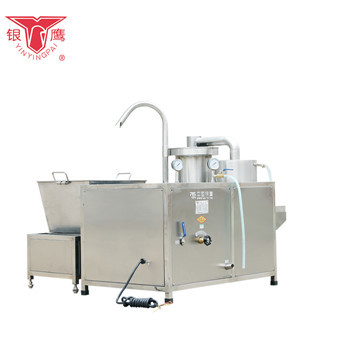
Next, place the rice-holding basket on the water-saving device and position the float separator and sand-and-gravel separator accordingly. Turn on the power switch, align the rice-discharge pipe with the rice-holding bin, and wait until the water in the float separator overflows. Then, rotate the rice-discharge pipe to align it with the rice-holding basket and pour the rice into the holding bin. As the rice washer continues to operate, the sand and gravel will be separated and discharged through the gravel-discharge pipe. Meanwhile, rice bran and other floating impurities will automatically flow into the float separator, while the grain particles will be discharged through the rice-discharge pipe into the rice-holding basket.
When shutting down, first turn the control valve handle to the waste-discharge position, then lower the drain pipe to remove any accumulated water and debris from inside the machine before turning off the water and power.
In addition to washing rice, the rice washer can also... Wash the sesame seeds. Things like that are convenient and quick.
Related News
2023-01-07
Contact Us
Postal Code: 250204
Company Address: Yin Ying Industrial Park, Zhangqiu District, Jinan City, Shandong Province
Copyright © 2025 Shandong YinYing Catering Machinery Co., Ltd. Website Development:Chinese enterpriseCross-border SEO Business license
